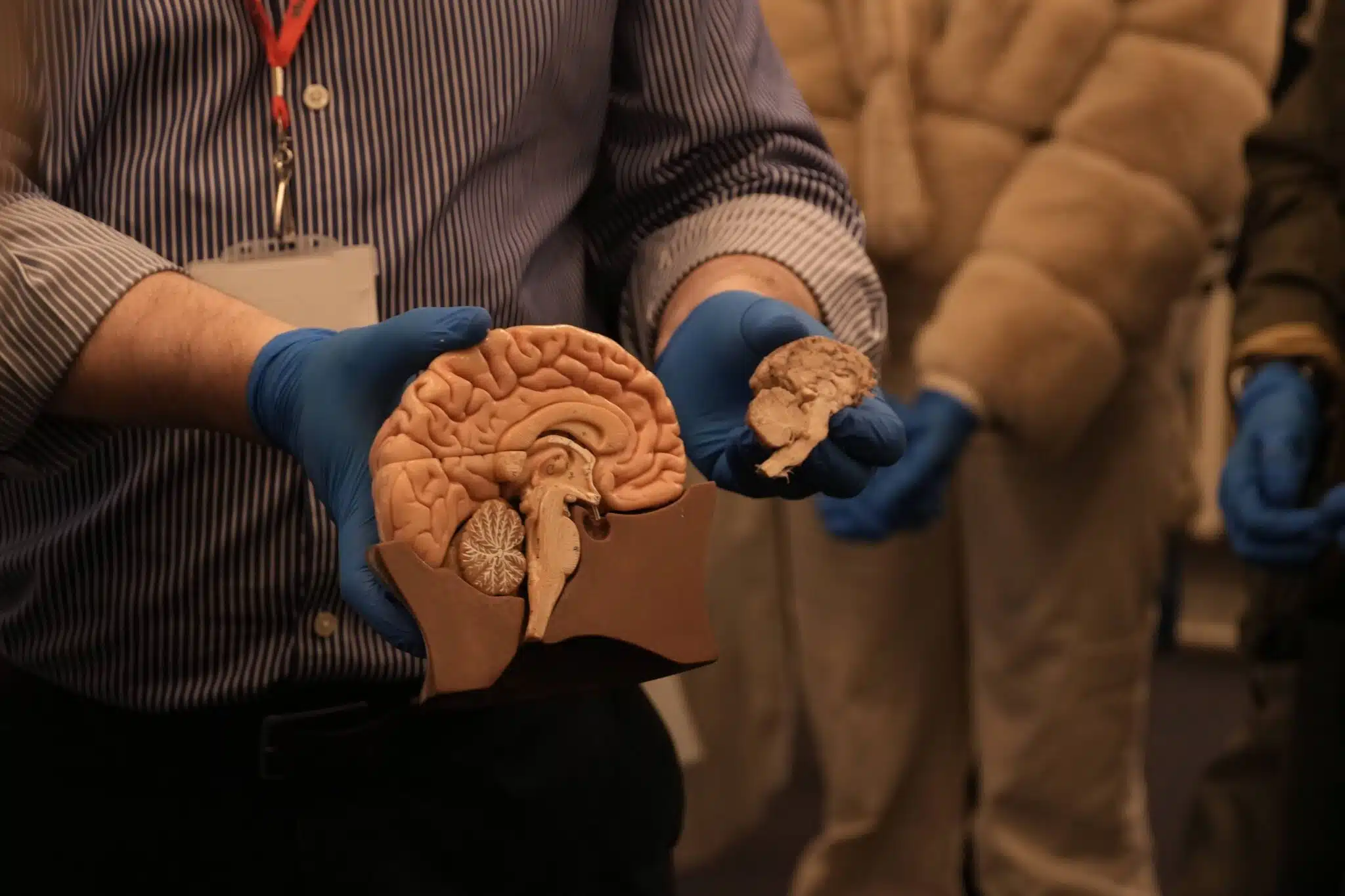

A Level Psychology: Brain Day
Miss Laura Stanley – Teacher of Psychology
On Thursday 6 February, our A level Psychology and Biology students took part in an intensive, thought-provoking Brain Day. The event, hosted at St Bede’s College, brought together practical demonstrations, contemporary research and legal-ethical debate to give students a vivid insight into modern neuroscience and its social implications.
Effects of Smartphones, Vaping and Trauma on the Brain
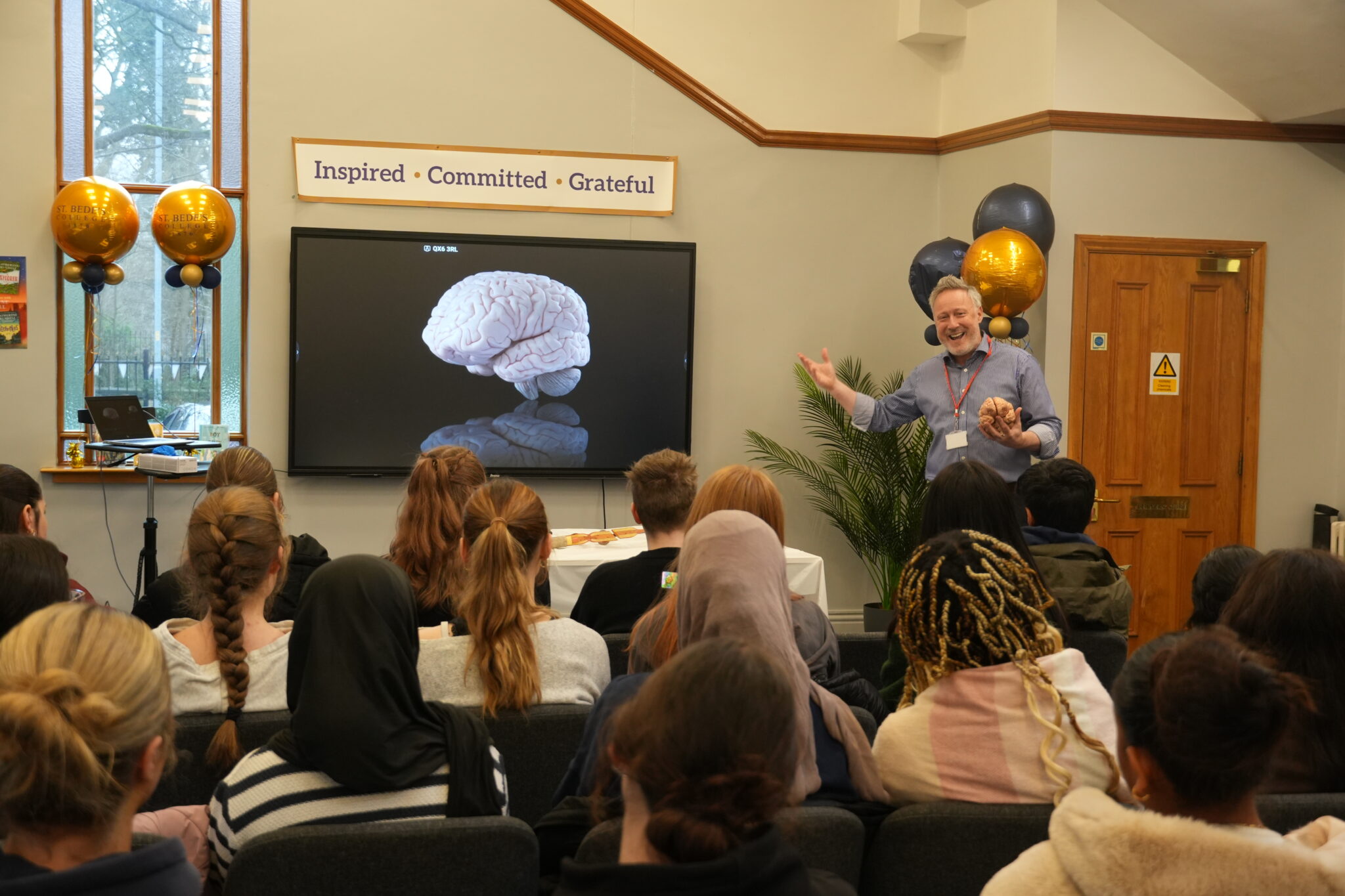
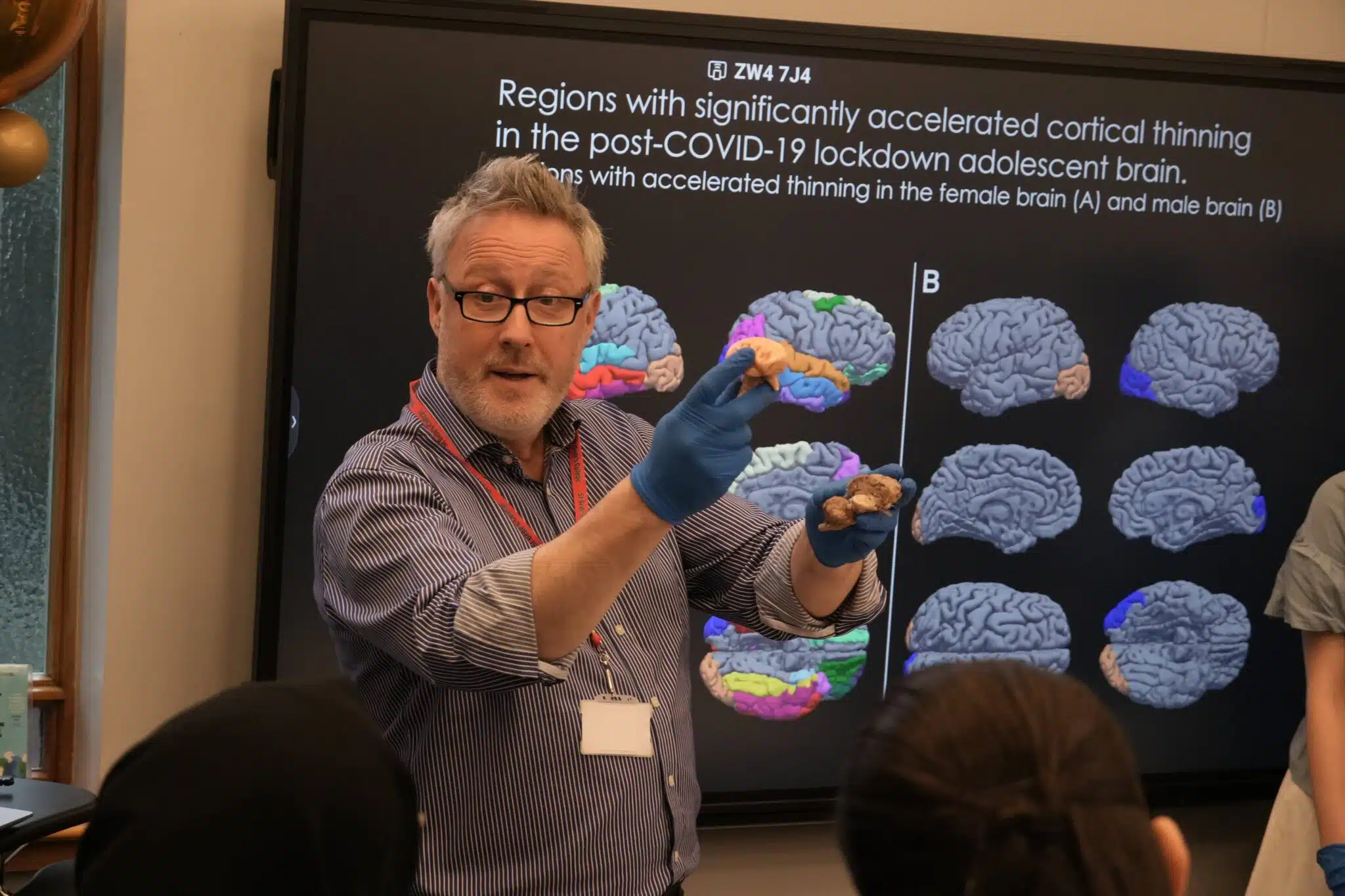
We were privileged to welcome Dr Guy Sutton of Medical Biology Interactive, who led a series of sessions for the day. Dr Sutton opened with a discussion of the influence of smartphones, vaping and trauma on adolescent brain development, summarising current evidence about attention, reward processing and risk taking. His clear exposition made complex neurodevelopmental concepts accessible and directly relevant to students’ own experiences.
Sheep Brain Dissection
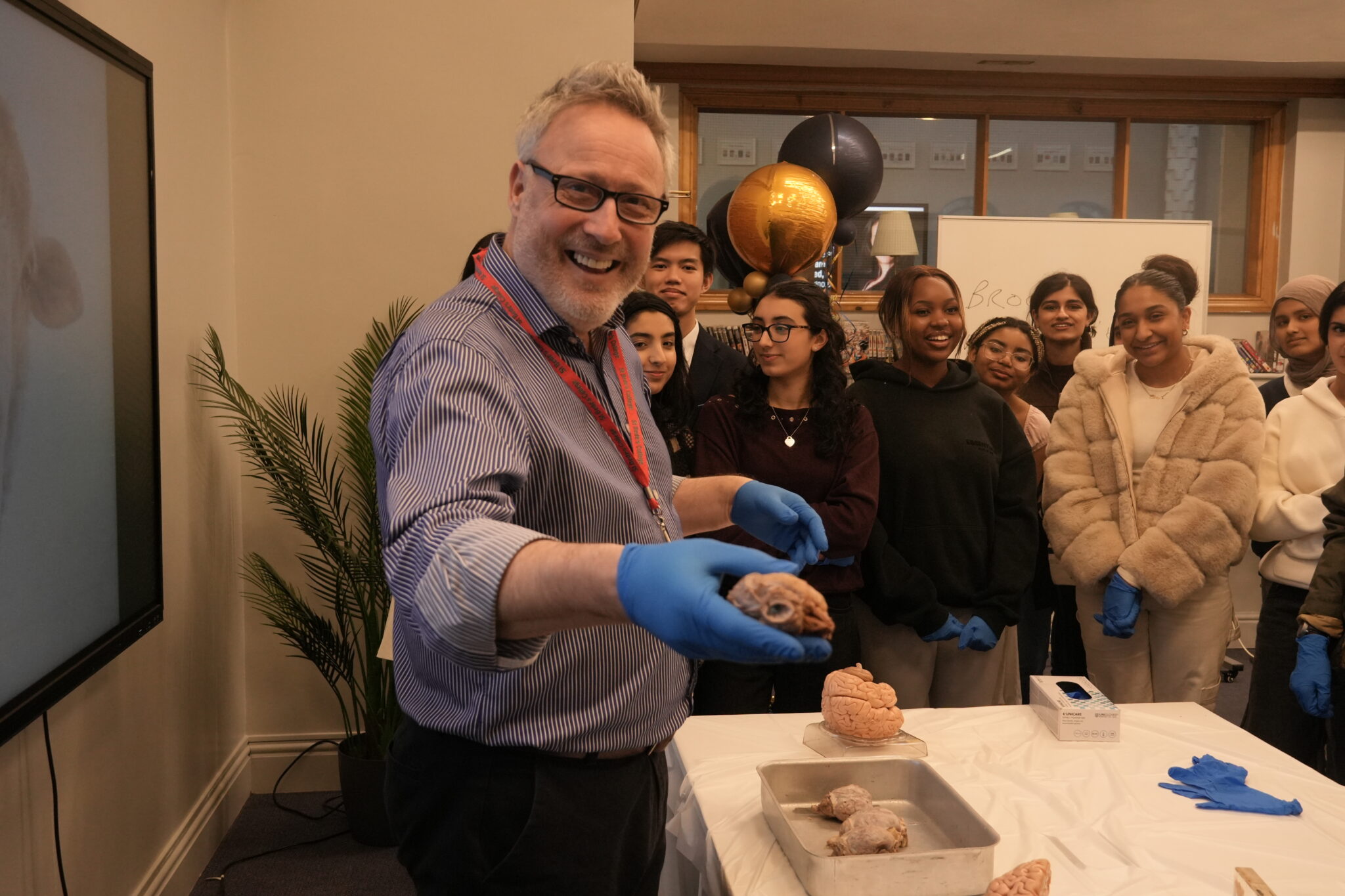
A highlight of the morning was a live brain dissection tutorial. Under careful supervision, students observed the anatomy of the brain and were guided through the structures most closely associated with memory, emotion and executive function. The hands-on element helped bridge textbook knowledge and real tissue, reinforcing curriculum learning with experiential insight.
Neuroscience and the Law
In a session exploring the intersection of neuroscience and the law, pupils examined “the criminological brain.” The group discussed a recent high-profile attempted murder case — the incident in which a 91 year old man was pushed from a railway platform — and debated whether a formal diagnosis of a psychological disorder could legitimately be invoked as part of a legal defence. Students considered the difference between diminished responsibility and legal insanity, the role of expert psychiatric evidence, and how courts balance culpability with mitigation. The conversation highlighted how psychiatric diagnoses may inform, but not automatically decide, legal outcomes; it also underscored issues around moral responsibility, public safety and fairness to victims.
Collaboration with Loreto College
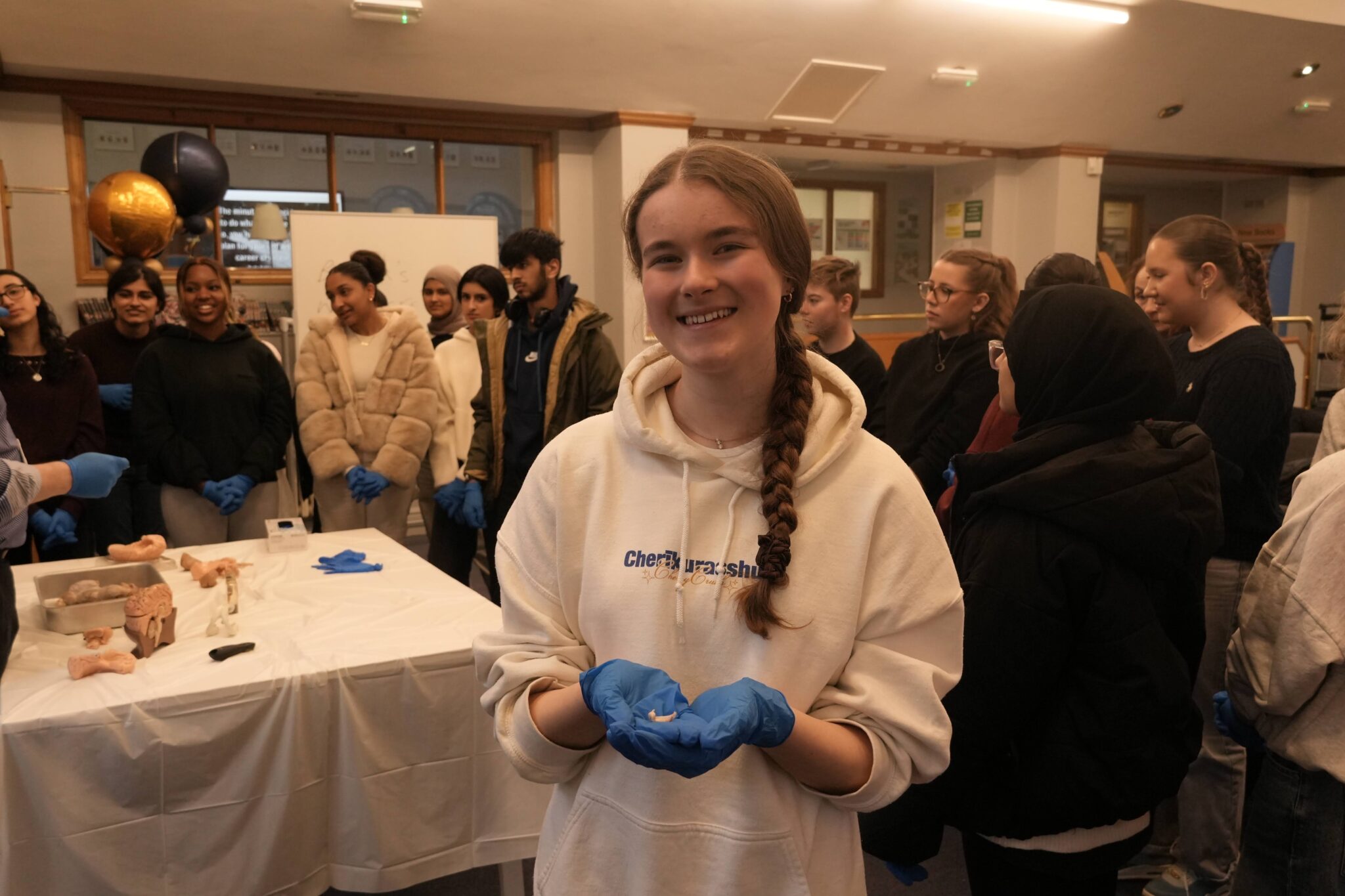
In the afternoon session we were delighted to welcome A level Psychology students from our neighbouring Loreto College to join us. The collaborative atmosphere enriched discussion, allowing students from both colleges to exchange perspectives and engage in thoughtful debate together.
Artificial Intelligence and Brain Microchips
The afternoon also moved into cutting-edge territory when Dr Sutton presented recent research on brain microchips and neural interfaces. Students learned about ongoing efforts to develop implantable microelectrodes that can record and stimulate neuronal activity at high resolution. We were shown footage of one of the early “thought-to-speech” brain-computer interfaces in action, a nascent technology that decodes neural signals associated with speech intentions and produces audible or textual output. Students were excited by the therapeutic possibilities for people with severe communication impairments, yet mindful of profound ethical concerns including privacy, consent and the possibility of erroneous decoding.
Conclusion
Brain Day 2026 provided an exemplary model of applied psychology in action: rooted in empirical evidence, alive to technological innovation, and alert to the real-world dilemmas those advances raise. For many students it was not only an educational milestone but also a prompt to think carefully about the ethical responsibilities that accompany scientific progress.